
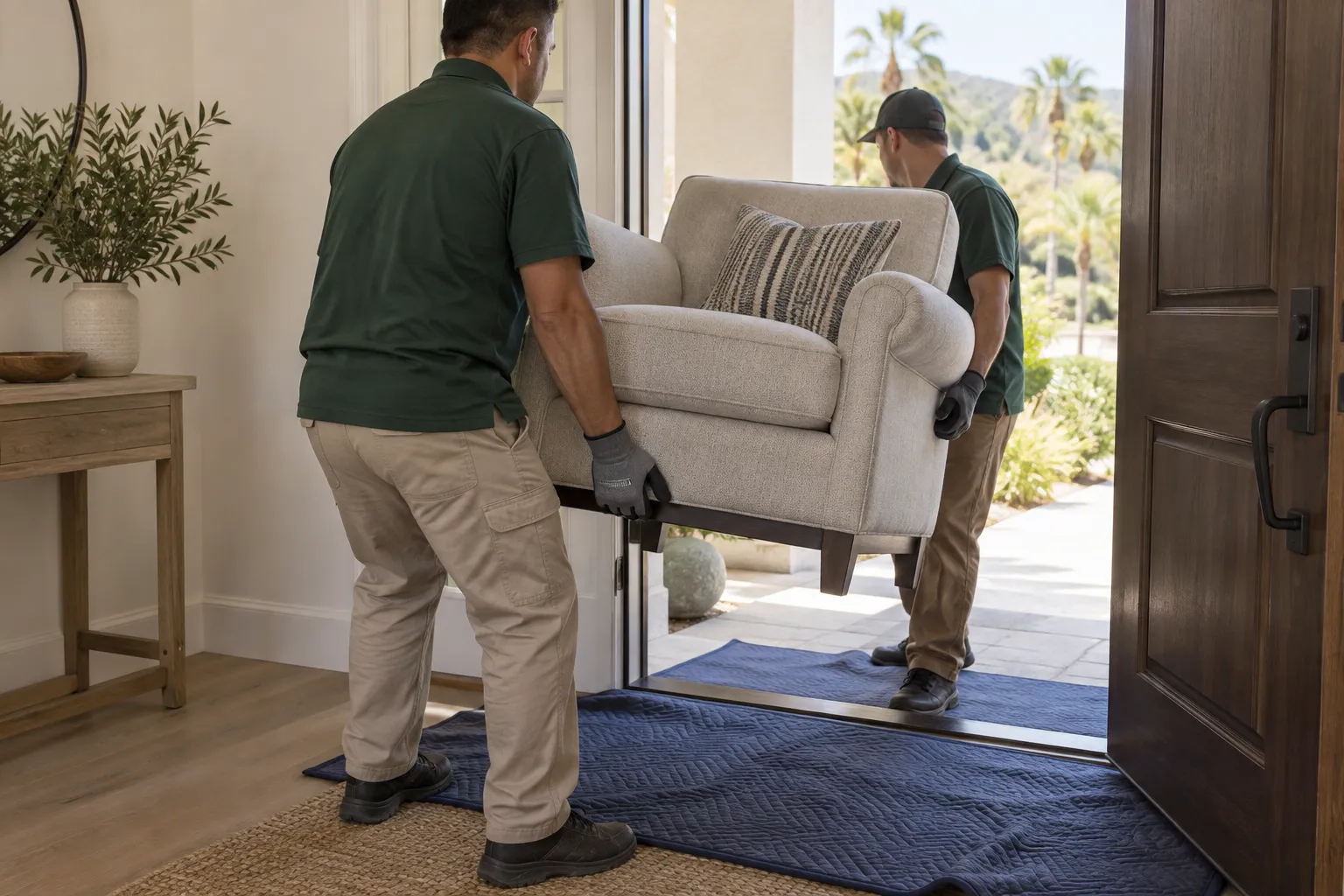
The best preparation is specific: identify the items, protect what stays, map the path out, and separate anything that needs a different disposal route.
Start with the exit route
Measure the sofa at its widest, tallest, and deepest points, then measure the narrowest doorway, hallway turn, stair landing, and elevator opening on the way out. A sofa that fits the room may not fit the route in one piece.
Tell the removal team if the sofa is a sleeper, recliner, sectional, or has a metal mechanism. Those details affect weight, balance, and whether disassembly needs to be discussed first.
Empty and inspect it
Remove cushions, blankets, toys, remotes, and anything stored underneath or inside a chaise compartment. Check between the frame and cushions. Secure or remove loose feet only when the manufacturer design makes that straightforward.
Do not cut the frame or dismantle a reclining mechanism yourself unless you understand the structure. Springs, sharp brackets, and stored mechanical tension can create a hazard.
Use a route checklist
- Width and height of the main exit
- Tightest corner or stair landing
- Elevator reservation and padding rules
- Distance to legal loading space
- Pets, gates, and household traffic
Keep the route clear, but leave the heavy lifting to the removal crew. Protect items that are staying by moving them away from the path.
Settle the quote details
Share the piece count, sofa type, dimensions, floor level, and access notes. Ask whether disassembly is included and whether additional pieces can be added only after the scope is reviewed. The estimate should account for the actual piece and route, not a generic sofa label.
Next step
Review the companion furniture removal page, then use the estimate checklist to collect the details a crew needs.