
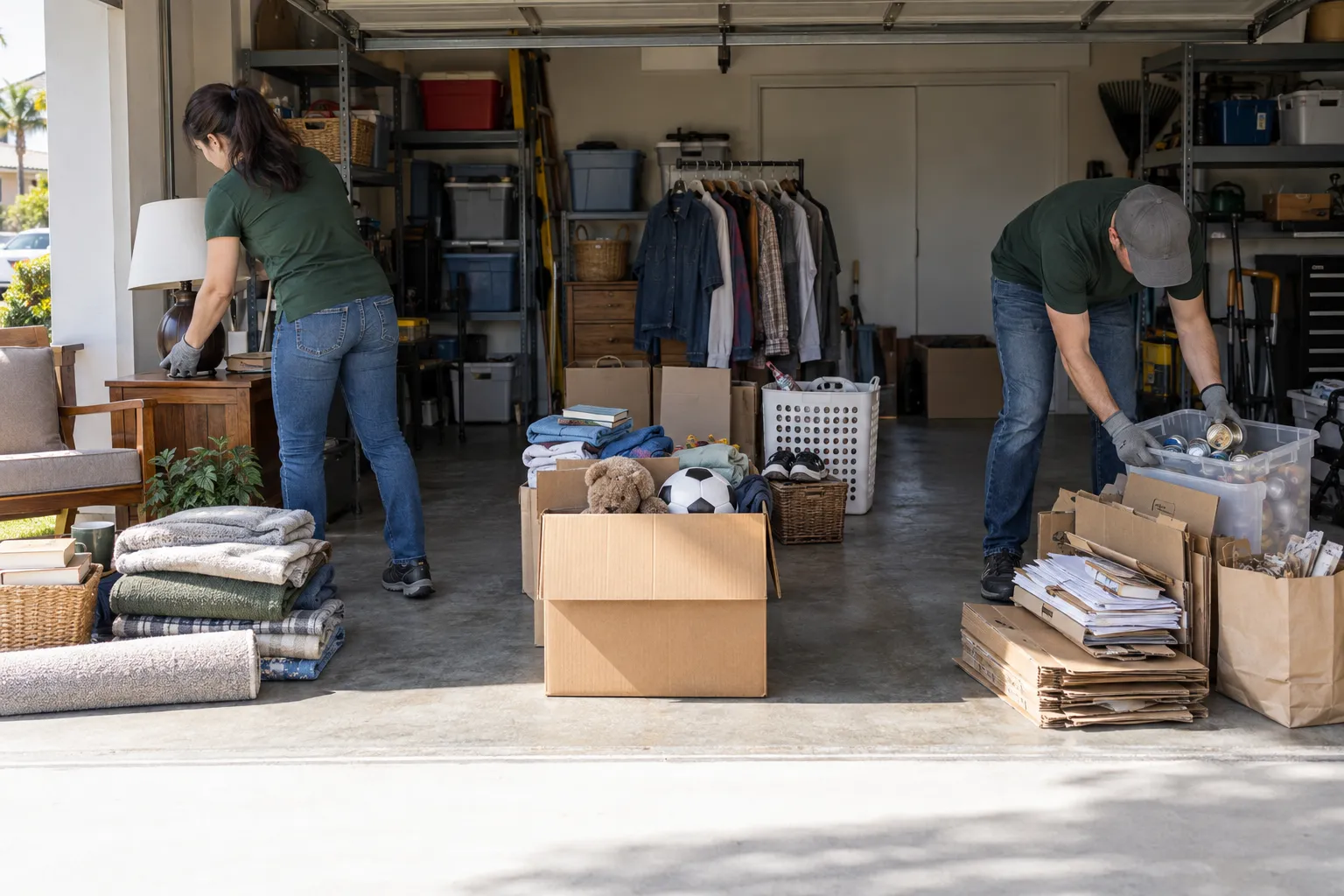
The best preparation is specific: identify the items, protect what stays, map the path out, and separate anything that needs a different disposal route.
Sort by destination, not by emotion
Create clear groups for keep, sell, donate, ordinary removal, recycling, and special disposal. A “maybe” pile delays every other decision, so give it a size limit and a deadline.
Use large labels that remain visible after boxes are stacked. Keep keys, records, tools still in use, and family items in a protected zone away from the removal path.
Isolate hazardous material first
Paint, automotive fluids, fuel, pesticides, pool chemicals, batteries, propane cylinders, and similar products do not belong in an ordinary junk load. Keep original labels in place and check the current local household hazardous-waste program for acceptance rules.
Open one safe lane
Clear a continuous walking path from the garage contents to the loading area. Do not build unstable towers or hide sharp items in thin bags. Box small loose objects and tell the crew about broken glass, pests, water damage, or heavy equipment.
Make an inventory that fits on one page
- Large furniture and appliances
- Approximate box and bag count
- Shelving or fixtures attached to the building
- Heavy, sharp, wet, or damaged items
- Items requiring a separate disposal route
Photograph the overview and the carrying path. Close-up photos alone can hide the real volume.
Next step
Review the companion garage junk removal page, then use the estimate checklist to collect the details a crew needs.