
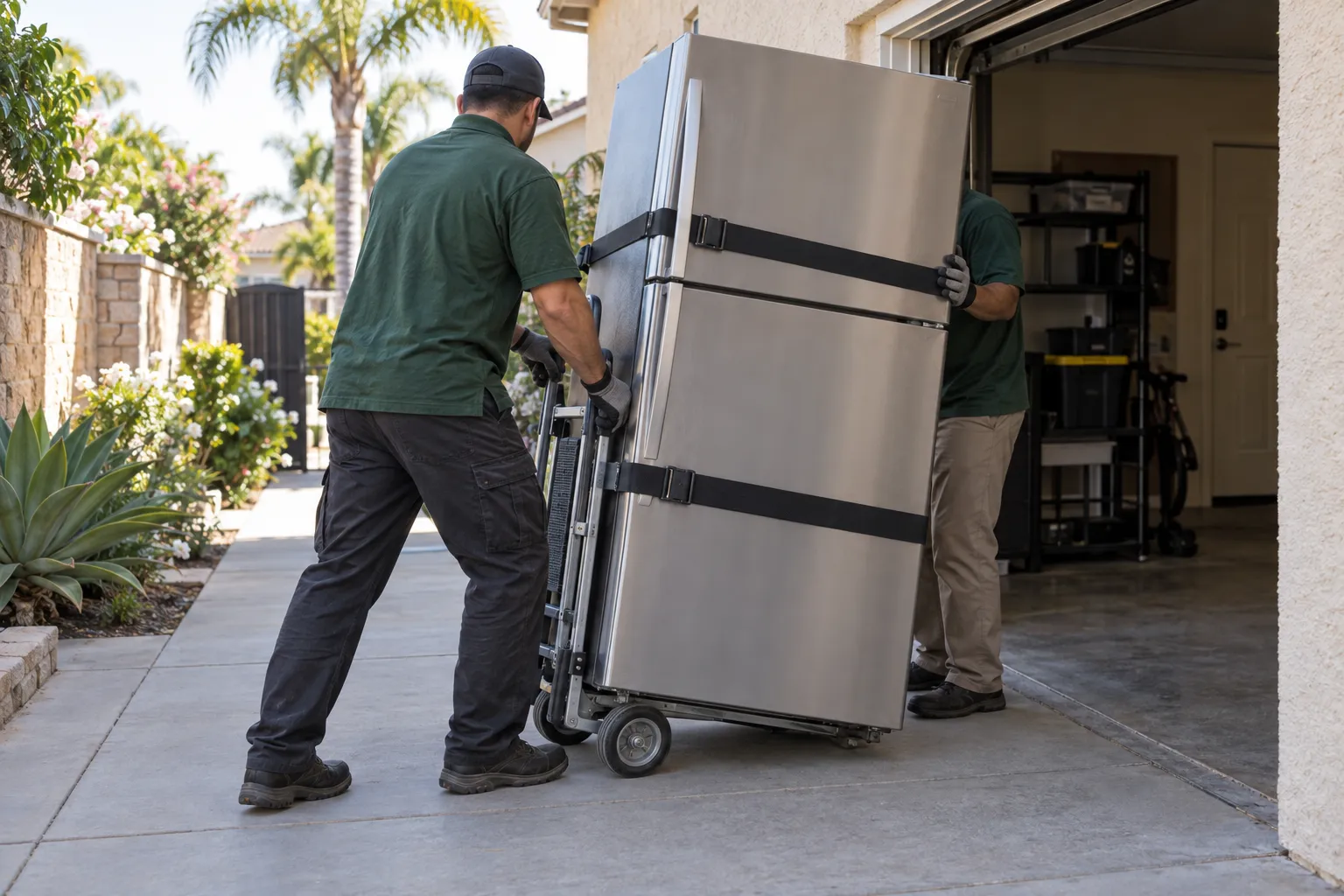
The best preparation is specific: identify the items, protect what stays, map the path out, and separate anything that needs a different disposal route.
Identify the appliance and connections
Name the appliance, brand if visible, dimensions, floor level, and whether it is freestanding or built in. Confirm whether it uses electricity, gas, water, or a drain connection. A removal crew should not be expected to disconnect a utility it is not qualified or authorized to handle.
Remove contents and residual water
Empty refrigerators, freezers, washers, and dishwashers. Defrost cold appliances early enough to contain meltwater. Drain hoses where the manufacturer instructions and site conditions allow, then protect the floor from drips.
Keep doors closed or secured for the wait, especially around children. Do not abandon an appliance outdoors with an accessible door.
Measure more than the appliance
| Check | Why it matters |
|---|---|
| Appliance width and depth | Shows whether it can move through the path intact |
| Door and hallway clearance | Reveals pinch points and turns |
| Floor level and stairs | Changes handling and labor |
| Parking and threshold | Defines the final carrying distance |
Confirm acceptance before moving it
Some appliances contain refrigerants or electronic components that follow specific disposal rules. Describe the unit accurately and confirm it is accepted before pickup day. Keep hazardous materials and loose chemicals out of the load.
Next step
Review the companion appliance removal page, then use the estimate checklist to collect the details a crew needs.